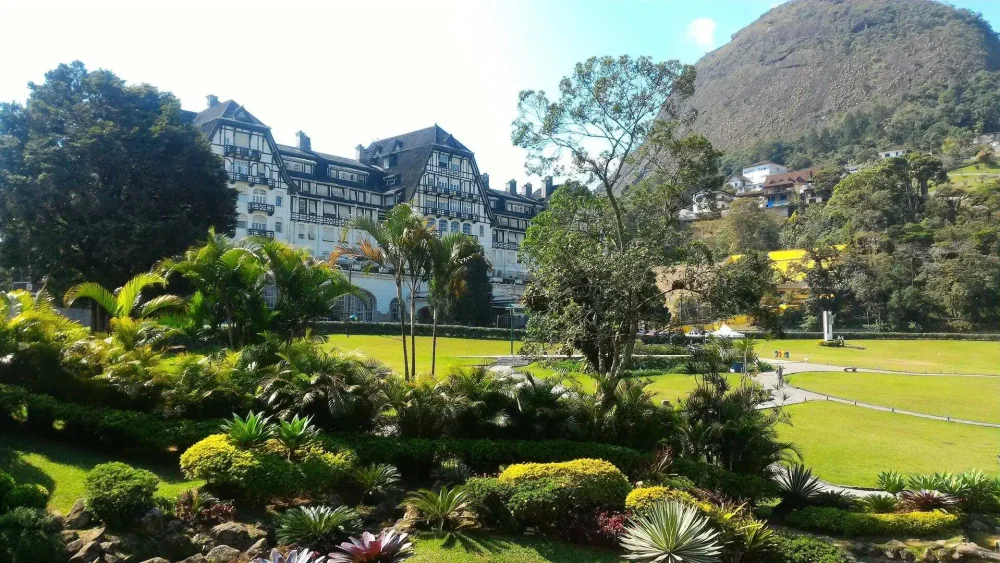
Petrópolis is one of the easiest places outside Rio to understand in a single day — but that does not mean the city only deserves one day.
The historic center is compact enough for a well-planned day trip, especially if your priority is Brazilian imperial history, architecture and a change from Rio’s coastal landscape.
At the same time, Petrópolis has enough museums, districts, restaurants and mountain areas to justify a longer stay.
That makes it a good day trip for a simple reason:
one day gives you a coherent introduction without pretending you have seen everything.
Quick Answer: Is Petrópolis Worth a Day Trip from Rio?
Yes, particularly if you are interested in:
- Brazilian history;
- imperial-era architecture;
- museums;
- mountain scenery;
- a slower day away from Rio’s major landmarks.
A typical private day can focus on:
- Palácio Quitandinha;
- Museu Imperial;
- Catedral São Pedro de Alcântara;
- Casa de Petrópolis / Casa dos 7 Erros;
with time for lunch and adjustments based on what interests you most.
The Be Free itinerary is a suggestion, not a fixed route.
One important exception: Monday is a different kind of day in Petrópolis. The main attractions normally do not offer their regular interior visits, so a Monday trip should be planned around the Historic Center, architecture, exteriors, walking and an unhurried lunch rather than presented as the same museum day.
Why Petrópolis Exists in the First Place
The relationship between Petrópolis and Brazil’s imperial family is not a marketing theme added later.
It is part of the city’s origin.
Dom Pedro I acquired land in the region in 1830, but the palace he imagined was never built during his time in Brazil.
His son, Dom Pedro II, later developed the property as a summer residence. In 1843, the imperial decree associated with the creation of Petrópolis was signed, and construction of the palace that now houses the Museu Imperial began in 1845.
The city grew around that imperial presence, but Petrópolis is not frozen in the 19th century.
Its architecture and history also include:
- German immigration;
- republican Brazil;
- early industrial development;
- Art Deco;
- the Quitandinha casino era;
- writers and political figures;
- neighborhoods and districts well beyond the historic core.
For a day trip, the challenge is deciding how much of that story to include.
What Fits in a Good Petrópolis Day Trip?
The answer depends on how much time you want inside museums.
A useful suggested structure is:
Palácio Quitandinha
Quitandinha gives the day a very different starting point from the imperial center.
The former hotel-casino opened in the 1940s and later became one of Petrópolis’s most recognizable 20th-century buildings.
Today the cultural spaces are operated by Sesc.
The building is useful in a day trip because it immediately shows that Petrópolis is not only about Dom Pedro II.
Museu Imperial
For most first-time visitors, this is the historical center of the day.
The museum occupies the former summer palace of Dom Pedro II and preserves a major collection related to Brazil’s imperial period, including the imperial crowns, ceremonial objects, furniture, documents and personal items.
It deserves time.
Trying to add too many other indoor attractions usually comes at the expense of actually looking at the collection.
Catedral São Pedro de Alcântara
The cathedral is one of the most visible landmarks in the historic center.
Its interior includes the imperial mausoleum containing the remains of Dom Pedro II, Empress Teresa Cristina, Princess Isabel and the Count d’Eu.
The cathedral works well with the museum because the two places tell different parts of the same larger story.
Casa de Petrópolis / Casa dos 7 Erros
The Casa de Petrópolis is a 19th-century residence known locally by the nickname Casa dos 7 Erros.
Its operational status should always be checked before the trip.
Under Be Free’s current operating plan, the house is temporarily closed for interior visits, so the stop is limited to the garden and exterior until that changes.
That is exactly the kind of information a day-trip article should make clear instead of promising an interior visit that may not happen.
Is the Itinerary Fixed?
No.
A private Petrópolis day works better when the published route is treated as a starting point.
Depending on your interests and the opening conditions that day, you may prefer to:
- spend longer at the Museu Imperial;
- remove one stop;
- add the Casa de Santos Dumont;
- include the Casa Stefan Zweig;
- visit the Museu Casa do Colono;
- add the Bohemia brewery experience;
- slow the day down for lunch and walking.
Not every addition has the same impact.
That is why “fully customizable” should not be confused with “everything fits.”
What About Vale do Amor?
Vale do Amor is the clearest example of a customization that changes the whole day.
It sits away from the main historic-center route.
If it is a priority, expect substantially less time for central Petrópolis and its major interior attractions.
In many cases, combining Vale do Amor with the day means choosing which major central visit matters most rather than simply adding one more stop to an already full itinerary.
That trade-off should be discussed before the tour.
Can You Visit Petrópolis on a Monday?
Yes — but do not expect the same day you would have from Tuesday to Sunday.
The Museu Imperial and several other major attractions normally do not offer their regular interior visitation on Mondays.
For Be Free, Monday remains a valid Petrópolis day because the city itself is still there.
The focus shifts to:
- the Historic Center;
- walking;
- architecture;
- attraction exteriors;
- a slower pace;
- lunch.
If an interior visit happens to be available exceptionally, it can be used, but it should not be promised in advance.
If museum interiors are the main reason you want to go, choose another day if you can.
Where Can the Day Start?
A Petrópolis private tour does not need to begin in Rio.
Be Free’s current format can start in:
- Rio de Janeiro;
- Petrópolis.
That matters for travelers who are already staying in the mountains.
The client chooses the preferred start time.
The team can recommend timing based on:
- departure point;
- traffic;
- attraction hours;
- what the group wants to prioritize.
The published product normally lasts around 7–8 hours, rather than being treated as an exact eight-hour block.
How Much Time Do You Spend Driving?
Petrópolis is close enough to Rio to work as a day trip but far enough away to feel like a different destination.
Travel time varies with:
- where you start in Rio;
- traffic;
- weather;
- road conditions.
It is better not to build a public itinerary around a promise of an exact drive time.
The important planning point is simpler:
Petrópolis is a full-day decision, not a stop to combine with a normal Rio sightseeing day.
Is Lunch Part of the Day?
Yes.
A good Petrópolis itinerary needs room for lunch rather than treating it as something to squeeze between attractions.
Lunch itself is not included in the Be Free product, but time for a lunch stop is.
The guide or team can suggest options based on:
- the route;
- the group’s preferences;
- where the day happens to be at lunchtime.
That flexibility matters more than naming one “best restaurant” in an evergreen blog post.
Should You Stay Overnight Instead?
Possibly.
Even the city’s official tourism material points out that one day is not enough to experience everything Petrópolis offers.
Stay longer if you want to explore:
- more museums and historic houses;
- Itaipava;
- mountain districts;
- breweries;
- restaurants without watching the clock;
- nature outside the central historical circuit.
A day trip is best understood as a focused introduction to Petrópolis, not as a claim that the city can be completed in seven or eight hours.
Who Usually Enjoys Petrópolis Most?
Petrópolis tends to work especially well for travelers interested in:
- history;
- architecture;
- museums;
- Brazilian monarchy and the 19th century;
- quieter urban environments;
- mountain scenery.
It may be less compelling if your only free day outside Rio is meant to be about:
- beaches;
- swimming;
- snorkeling;
- boats.
For that kind of day, Ilha Grande offers something almost opposite.
Our Petrópolis vs Ilha Grande comparison can help with that choice.
Frequently Asked Questions
Is one day enough for Petrópolis?
One day is enough for a strong introduction to the main historic area.
It is not enough to see the whole city.
If you want museums, mountain districts, breweries and slower evenings, stay longer.
Is Petrópolis open on Monday?
The city is open, but many major attractions normally do not offer regular interior visitation on Mondays.
A Monday day trip should therefore be planned differently.
What is the most important attraction in Petrópolis?
For most first-time visitors interested in Brazilian imperial history, the Museu Imperial is the central visit.
But Petrópolis has important architecture and history from later periods as well.
Can I customize a Petrópolis day trip?
Yes.
Stops can be removed, reordered, replaced or added when operationally feasible.
The amount that fits depends on opening hours, location, traffic, start time and how long you spend at each place.
Can I add Vale do Amor?
Yes, but it changes the structure of the day substantially.
Do not treat it as a quick extra stop.
Can the tour begin in Petrópolis?
Yes.
Be Free’s private product can start in Rio or Petrópolis.
Plan a Petrópolis Day
If you want a focused day of history, architecture and mountain scenery, see the current private Petrópolis tour.
If you are still deciding whether to use your free day for history or the coast, compare Petrópolis and Ilha Grande first.
For more destinations outside the city, browse our private day trips from Rio.