
Little Africa: Rio's Soul & African Heritage Unveiled
About This Experience
Between 1811 and 1831, approximately 900,000 enslaved Africans arrived in Rio de Janeiro through a single dock on the waterfront of what is now the port district. The Cais do Valongo — Valongo Wharf — was the largest point of entry for enslaved Africans in the entire history of the transatlantic slave trade. It is now a UNESCO World Heritage Site, recognised as the most important physical trace of the African slave trade in the Americas. The Little Africa walking tour was built around this site and the neighbourhood that grew from it.
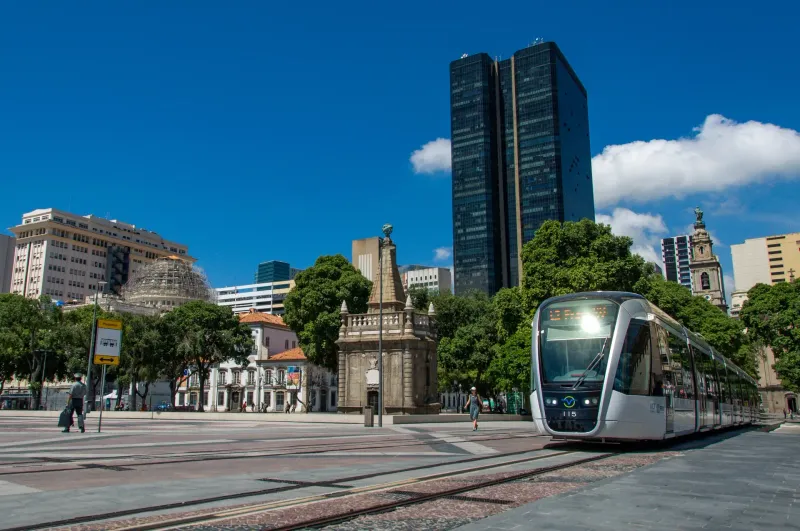
The tour begins at Praça XV and moves through the historic port district — the area known as Pequena África (Little Africa) — that was the centre of Afro-Brazilian life in Rio for over two centuries. Meeting point is the General Osório Statue at Praça XV, easily reached by metro (Uruguaiana station) or Uber.
The history of this neighbourhood is inseparable from the history of Brazil. The enslaved Africans who arrived at Cais do Valongo did not come from a single place or culture — they came from across West and Central Africa, speaking different languages, practising different religions, carrying different knowledge systems. Over generations, in the specific conditions of Brazilian slavery and then emancipation, these traditions fused with each other and with Portuguese and indigenous Brazilian elements to create what is now recognised globally as Afro-Brazilian culture: candomblé, capoeira, samba, the culinary traditions of the state of Bahia, and the social forms that make Brazil distinctive among the nations of the Americas.
The Cais do Valongo itself was rediscovered during construction work for the 2016 Olympic Games, buried under subsequent layers of landfill and construction. Archaeological excavation revealed the original stone wharf surface along with thousands of artefacts — beads, amulets, and personal objects that belonged to the people who passed through it. The site is now preserved and interpreted in place. Your guide's historical and cultural context is essential to understanding what you are seeing.
The Pedra do Sal — a large rock formation at the edge of the port district — was one of the main gathering places for African communities in colonial and imperial Rio. It became a centre for the development of samba in the late 19th century; many historians consider it one of the birthplaces of the musical form. The weekly roda de samba that takes place there on Monday evenings continues a tradition that is over a century old.
The Instituto Pretos Novos, built on the site of a colonial-era cemetery for enslaved Africans who died shortly after arrival, is one of the most sobering historical sites in Rio — and one of the least visited by international tourists. Archaeological work at the site has recovered thousands of skeletal remains. The institute now combines a museum, research centre, and space for Afro-Brazilian cultural programming.
This tour covers difficult historical content — the realities of slavery, the scale of the trade, and its lasting consequences — approached with depth and honesty. For travellers who want to understand Brazil beyond its beaches and carnival, it is an essential experience. For children under 12, consider whether the content is age-appropriate.
Not available on Sundays. The tour runs Monday to Saturday. Transportation to the meeting point is not included.
Included: certified local guide, all site entrance fees, and complimentary bottled water.
- Cais do Valongo UNESCO site
- Little Africa district
- African influence on Brazilian music
- Afro-Brazilian religions and traditions
✓ Included
- Expert local guide
- Historical insights
✕ Not Included
- Transportation to/from meeting point
- Museum fees
- Food and drinks
Standard Package
| Group Size | Price |
|---|---|
| per person | US$ 65 |
- How it works: After you click Book Now and submit your booking request, we'll review the details and send a secure payment link by email.
- Payment deadline: Full payment must be completed at least 72 hours (3 days) before the tour date.
- Last-minute bookings: Reservations made within 72 hours of the tour require immediate payment to secure availability. The payment link will be sent as soon as possible.
- Accepted methods: Credit and debit cards, processed securely via Stripe.
- Important: Bookings that remain unpaid will be automatically released 72 hours before the tour. Reminder notifications are sent by email and WhatsApp.
- Free cancellation: Cancel free of charge up to 72 hours (3 days) before your tour start time.
- Changes or rescheduling: To cancel, modify, or reschedule your tour, please contact us by email or WhatsApp as soon as possible. We'll do our best to accommodate adjustments whenever feasible.
- Late cancellations: Tours canceled less than 72 hours before the start date are non-refundable.
- Weather Conditions: If severe weather conditions make the tour unsafe or unviable, we'll offer a full refund or the option to reschedule at no additional cost.
- Cais do Valongo is a UNESCO World Heritage Site — the most important physical trace of the African slave trade in the Americas. Visiting with a knowledgeable guide provides the historical context that transforms this from a dock into one of the most significant sites in the Western Hemisphere.
- This tour covers serious historical content including the realities of slavery and its legacy. It is approached with depth and respect. For children under 12, consider whether the content is age-appropriate.
- Meeting point is the General Osório Statue at Praça XV — easily reached by metro (Uruguaiana station) or Uber. Transportation to the meeting point is not included.
- The Little Africa district is best explored on a weekday when the area has its authentic working rhythm. Avoid Sundays when many locations are closed.
- Not available on Sundays — the tour runs Monday to Saturday.
What is the Cais do Valongo and why is it a UNESCO World Heritage Site?
Cais do Valongo was the main slave disembarkation point in the Americas -- an estimated 900,000 enslaved Africans arrived through this wharf between 1811 and 1831. Rediscovered during urban construction in 2011, it was declared a UNESCO World Heritage Site in 2017 as the most important physical trace of the African slave trade in the Americas. Visiting it with an informed guide is a powerful and necessary experience.
Is this tour appropriate for children?
The Little Africa tour discusses the realities of slavery and its legacy honestly and with appropriate depth. For children over 12 who are intellectually curious, it can be a meaningful educational experience. For younger children, the content may be better approached with parental guidance. The tour is 3 hours on foot.
Is this tour available every day?
Available Monday to Saturday. Not available on Sundays. The tour starts at the General Osório Statue at Praça XV, easily reached by metro (Uruguaiana station) or Uber.
Is transportation to the meeting point included?
Transportation to Praça XV is not included. It's easily accessible by metro (Uruguaiana station) or Uber from all Rio neighborhoods.
You Might Also Like
Santa Teresa Walking Tour: Art, History & Hidden Corners

Rio Food Walking Tour: Authentic Brazilian Culinary Experience
Ready to Book?
Secure your spot today and experience Rio like never before
Request sent. This is not a confirmation yet — we'll confirm by email within 1 hour.